The method behind PiggyBucket
Why three buckets work
better than one
A single piggy bank teaches kids to save. Three buckets teach them to manage. Here is why the distinction matters more than most parents realize.
Allowance is usually a single pile. And it doesn't teach much.
Most kids receive an allowance as a single sum. It goes into one place, gets spent at random, and the lesson ends there.
Financial advisors consistently report that the clients who struggle most with money are not the ones who earned too little. They are the ones who never learned to manage money intentionally. What if a simple framework existed to teach kids about money early that could carry into adulthood?
“The goal isn’t to teach kids to save. It’s to teach them that every dollar has a purpose.”
The three-jar method has been around for decades. There’s a reason.
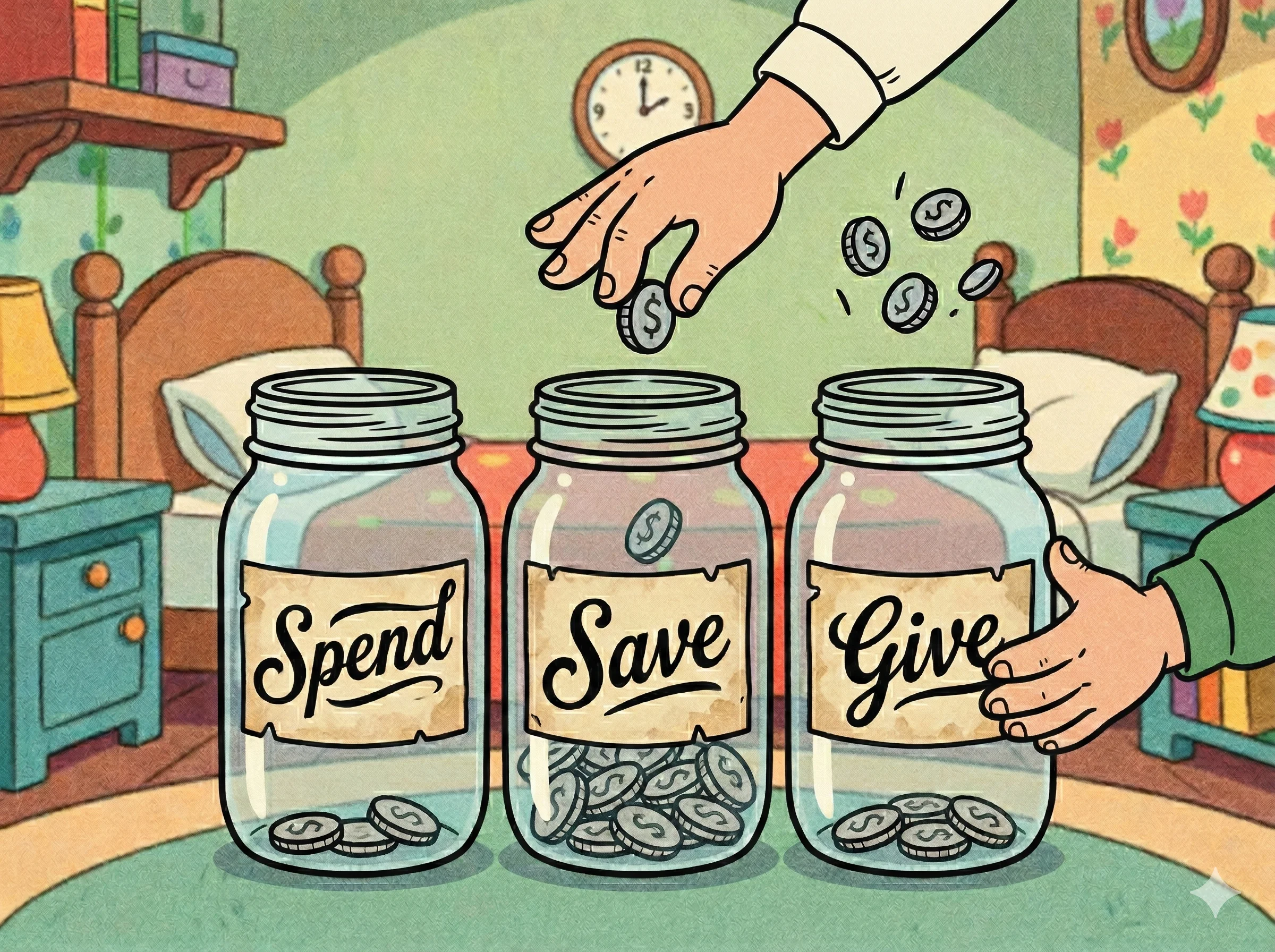
Since at least the 1990s, financial educators, wealth managers, and parenting researchers have recommended splitting children’s money into three jars: spend, save, and give.
It is also one of the few financial frameworks that is just as easy to understand at six as it is at sixty. This makes early financial education one of the most useful things a parent can do for their child’s future.
- of teens surveyed say they don’t feel confident in their own personal finance knowledge
- 74%
- the age by which money habits and attitudes are largely formed, per Cambridge and Money Advice Service researchers
- 7
- of high schoolers cannot correctly answer basic questions about interest, inflation, or investment risk
- 67%
Sources: Greenlight, University of Cambridge / Money Advice Service, Urban Institute / Jump$tart
Spending
Opportunity cost, the idea that choosing one thing means giving up another, is one of the most important economic concepts. Most adults encounter it abstractly, in a textbook, years after their spending patterns are already set.
When a child has a Spending bucket with a fixed balance, opportunity cost becomes tangible and immediate. Buying stationery means there is no money for a LEGO set.
The lesson is to “choose deliberately.” That distinction is the difference between a budget that works and one that doesn’t.
“Is this worth more to me than everything else I could buy with it?”
Saving
Saving for a goal is different from saving as a habit. Both matter, but most financial education starts with the discipline and never gets to the purpose. PiggyBucket starts with both at once. A child who can see a progress bar filling toward something they actually want has a visceral reason to keep money in the Save bucket.
But the larger lesson is compound interest. When a parent sets a monthly interest rate — 3%, 5%, even 10% for younger kids — the Save bucket earns a continuous return each month. Kids who watch their money make money grasp the concept in a way no textbook explanation can match.
$34.25
5.0% / mo interest
76% of “Mud Spa Day” goal
You become the bank. On purpose.
When you pay the interest out of your own pocket, you’re not just simulating a savings account. You’re demonstrating that a depositor’s patience creates real value for the bank and that the bank rewards that patience. That’s also how investing works. And your child is experiencing it at a scale they can understand, with a rate high enough to notice. It also sends another message: you care enough about their savings to pay extra for it.
Giving
Generosity is the part of money education that most parents leave for later, if ever. But that later moment rarely arrives on its own. Financial advisors who work with high-net-worth households report the same finding over and over. Wealthy clients who give regularly built that habit early in life.
The Give bucket makes generosity automatic and equal. It is funded on the same schedule as Spending and Saving, which means the question is never “can we afford to give?” but “where does this giving money go?” That is an entirely different conversation.
The research on givers
Studies from Indiana University’s Lilly Family School of Philanthropy find that regular givers also save and budget more consistently than non-givers across all income brackets. Generosity and financial discipline appear to be correlated. It is not just that generous people have more. The habit of intentional allocation carries across all buckets.
Abundance from the first dollar
Teaching a child to give while they are still young and their stakes are low builds something much harder to quantify: a sense that there is enough. Children who grow up giving a portion of every dollar tend to approach money from sufficiency rather than scarcity. That mindset, more than any specific strategy, is the foundation of a financially healthy life.
Teaching a child to give from their first dollar builds a mindset of plenty before the world can teach them scarcity.
The system grows with them
A five-year-old and a fourteen-year-old need different things from a money system. PiggyBucket is designed to evolve as your child does.
- ✓ Keep the split simple: 40% Spend, 40% Save, 20% Give.
- ✓ Set a high interest rate (10%+) to make compounding visible fast.
- ✓ Goals should be short-horizon (weeks, not months). Let them win early.
- ✓ Involve them in setting their own split percentages and interest rate.
- ✓ Set longer-horizon goals (a camera, a car fund) to stretch their planning.
- ✓ Review the monthly statement together. Make it a ritual, not a lecture.
For a deeper framework, see The Opposite of Spoiled by Ron Lieber and the CFPB’s “Money as You Grow” guide.
The app is a tool. The conversation is the point.
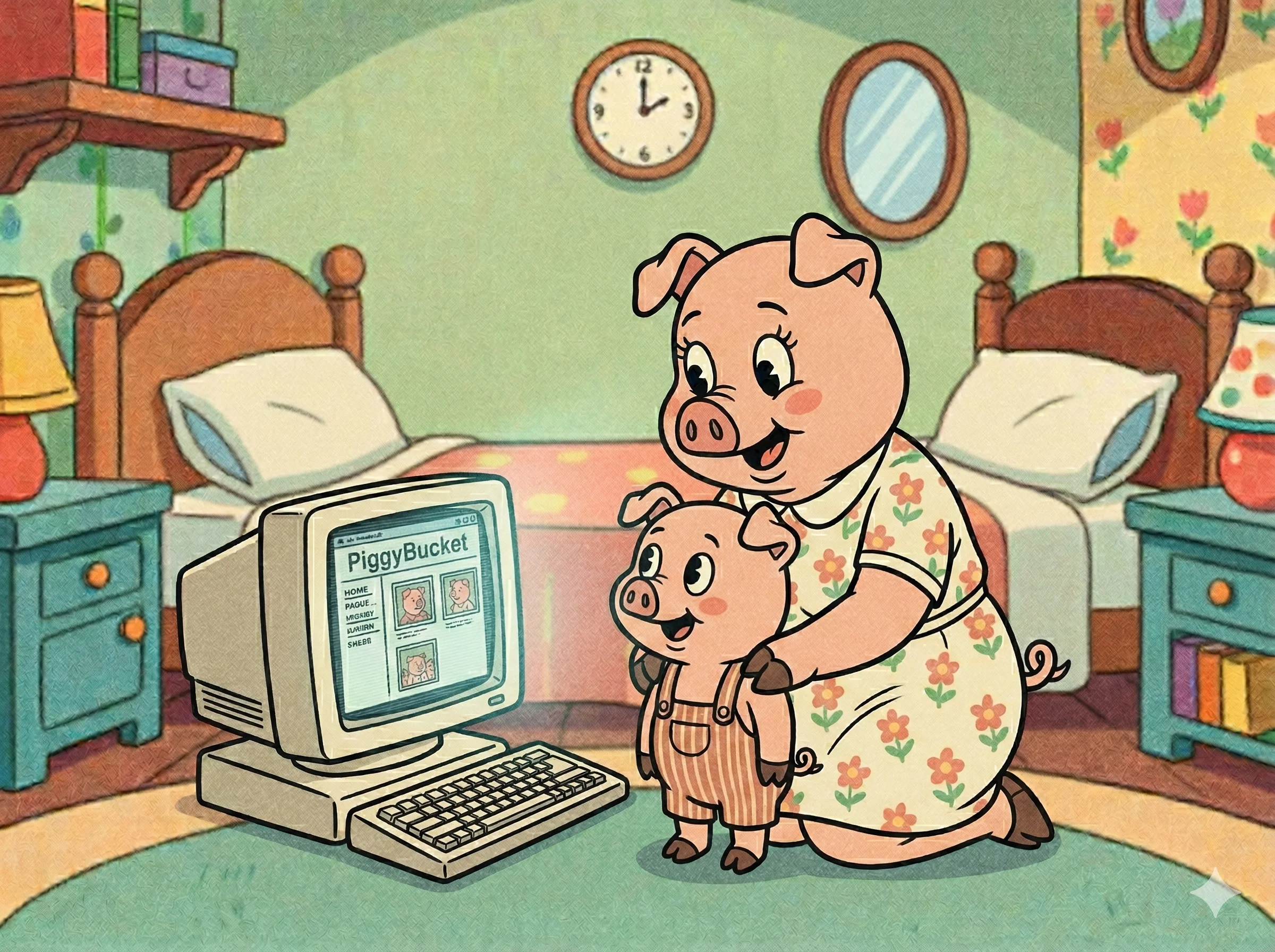
No app teaches a child about money. A parent does. PiggyBucket gives you a shared view to make that conversation easier and more frequent.
The research on financial literacy consistently finds that parental modeling and direct conversation outperform formal classroom instruction by a significant margin. You are the most powerful financial educator your child will ever have.
Start the system today.
Set up your first child in about two minutes. No bank account required.